Motorcycle Route Planning
Motorcycle Route Planning
Kategorija: Motociklističke ture | Mjere predostrožnosti | Preporuke za putovanja
Inspiration Is Only the Starting Point

A good motorcycle route is not created by simply connecting two places on a map. For a real motorcycle tour, the best road is rarely the fastest road, and the shortest connection is often the least rewarding one.
Professional motorcycle route planning means building a tour that works from the saddle: scenic roads, mountain passes, coastal roads, valleys, gorges, ferries, border crossings, fuel stops, hotels, weather, riding time, sightseeing and special experiences all have to fit together.
Navigation tools are useful. Google Maps, route planning apps, Garmin BaseCamp, GPX files, tracks and motorcycle navigation systems can all support the planning process. But they do not replace real motorcycle touring experience.
Maps, travel videos, photos, online reports and rider recommendations can be excellent sources of inspiration. They may reveal remote valleys, spectacular viewpoints, national parks, ferry routes, mountain passes, coastal roads or small paved roads away from standard tourist traffic.
But inspiration is not a finished motorcycle tour.
This becomes especially clear in regions with many outstanding riding sections. The Balkans are a perfect example. Croatia, Bosnia and Herzegovina, Montenegro, Serbia, North Macedonia, Albania and Romania all offer fantastic motorcycle roads. New Zealand is equally demanding in a different way, with long distances, changing weather, ferry connections and the rhythm of riding across two islands.
The challenge is not finding beautiful roads. The challenge is turning them into a complete tour that works day after day.
A spectacular pass, gorge, valley or coastal road only belongs in the route if it fits the full plan: daily distance, hotel location, fuel availability, road conditions, ferry schedules, border timing, daylight, weather and the riding level of the group.
A Motorcycle Tour Is More Than a Line on a Map

A motorcycle tour should never be planned as a simple transfer from Hotel A to Hotel B. The route must create time for the moments that make the journey memorable.
That may be a viewpoint, a national park, a ferry crossing, a local lunch, a short walk, a rafting tour, an outdoor hot bath with a mountain view in Albania or an overnight experience on a boat in Doubtful Sound in New Zealand.
These experiences do not happen by accident. They must be built into the route.
If a boat departs around midday, the morning stage must be short enough to arrive without pressure. If the boat returns around midday the next day, the following riding stage can only begin in the afternoon. If the group should have time for sightseeing, rafting, a special local stop or a shared team experience, the riding day cannot be calculated as if every hour were available for riding.
This is one of the key differences between a basic navigation route and a professionally designed guided motorcycle tour. The plan must balance riding, logistics, free time and group experience.
Modern route apps can suggest curvy roads, scenic alternatives and interesting connections. They are helpful tools, but they do not know the tour.
An app can calculate a road between two points. It can avoid highways or prefer winding roads. But it does not know which small valley is the real highlight, which mountain pass fits the rhythm of the day, where the group should stop, which road only looks good on the screen, or which section is worth a detour.
The best motorcycle roads often have to be selected deliberately. The planning software must be told exactly where the route should go. For that, the planner first needs to know which roads matter.
That knowledge comes from research, experience, map work, road knowledge, timing checks and detailed preparation — not from accepting the first automatic route calculation.
From Highlights to Real Riding Days

Many countries offer more great motorcycle roads than can realistically fit into one tour. Professional route planning means deciding which sections belong together and which ones do not.
A famous mountain pass may be too far away from the next suitable hotel. A remote gorge may be spectacular but difficult to combine with fuel stops or daylight. A coastal road may be perfect early in the morning but too crowded later in the day. A scenic detour may be worth it only if the rest of the day remains realistic.
A strong riding day needs a natural flow. It should be exciting, but not overloaded. It should include memorable roads, but still leave enough time for fuel, lunch, photos, sightseeing, weather changes and a relaxed arrival.
The goal is not only to reach the next overnight stop. The goal is to create a riding day that feels right on a motorcycle.
A multi-day motorcycle tour should not be built as one huge route from the first day to the last. A 20-day tour, for example, should be divided into 20 separate riding days.
At MotoGS WorldTours, each riding day is planned individually. Depending on the route, one day can also be divided into several smaller sections or sub-stages. A single riding day may include up to five separate parts, for example around fuel stops, viewpoints, ferries, border crossings, lunch stops, sightseeing or special activities.
This makes the route easier to manage on the navigation device and much safer to control during the tour. If a problem appears in one section, it affects only that part of the day — not the entire route.
This structure is an important part of professional motorcycle navigation. It gives the guide better control, makes the route easier to check and helps keep the day flexible without losing the planned road choice.
Tracks, Routes and Navigation Devices
One of the most important technical details in motorcycle route planning is the difference between a route and a track.
A route is usually calculated by the navigation device. It connects selected points according to the device settings, map data and routing logic. If the navigation device uses different maps or different settings than the planning software, the final route can change.
A track is different. A carefully prepared track contains a detailed line with many points. It shows exactly where the planned road should go.
After the route has been created on the computer, for example in Garmin BaseCamp, the track is transferred to the navigation device — either via SD card or directly to the device memory. On the navigation device, the track then has to be converted into a route with the correct settings.
Because the track is based on a detailed line, the converted route follows the planned roads much more precisely. This helps ensure that the route ridden on the motorcycle is the same route that was created during the planning process.
Automatic recalculation can be useful in everyday driving, but it can be a serious problem on a carefully planned motorcycle tour.
If the navigation device recalculates the route after a missed turn, a road closure or a different routing setting, it may replace the planned route with a new one. That new route may be faster or shorter, but it may skip exactly the roads that were selected for the motorcycle tour.
That is why the navigation device must be prepared correctly before the ride starts. The planned track must be transferred, converted, checked and protected from unwanted recalculation as far as possible.
This is not a minor technical detail. It is one of the key differences between casual GPX use and professional motorcycle tour preparation.
Guided Motorcycle Tours Reduce Daily Planning Stress
On a guided motorcycle tour, riders do not have to solve the route every evening. The guide manages road choice, timing, breaks, fuel stops, ferry timing, border timing and practical decisions during the day.
Riders still ride their own motorcycle, carry their own luggage, manage their gear and remain part of the group. But they do not have to spend the evening checking maps, hotels, ferries, weather, offline maps, charging cables and navigation settings for the next stage.
This is one of the main advantages of a guided motorcycle tour: riders can focus more on riding, scenery, the group and the shared experience.
Self-guided motorcycle tours can also be excellent, but they require more personal responsibility. The rider must understand the route, manage timing, check fuel stops, react to road changes and make independent decisions.
A GPX file or track can help, but it does not remove the need for preparation. Navigation devices, apps, offline maps, mobile data, charging setup and backup options should be tested before departure.
Self-guided riding offers more independence. Guided riding offers more structure, local decision-making and support during the tour.
MotoGS WorldTours routes are planned around real motorcycle touring, not fast transfers. The focus is on scenic roads, riding flow, small groups, realistic daily stages and routes that make sense from the saddle.
For Balkan and European motorcycle tours, this may include Adriatic coast roads, mountain passes, remote paved roads, valleys, gorges, ferries, border crossings, viewpoints, local experiences and less obvious connections away from standard tourist routes.
For New Zealand motorcycle tours, route planning may include long distances, changing weather, ferry connections, special overnight experiences, changing road conditions and the rhythm of riding across both islands.
This kind of planning takes time. It is not only drawing a line on a screen. It is turning months of research, road knowledge, logistics, timing, navigation preparation and motorcycle experience into a tour that works in real life.
That is what makes a motorcycle route feel natural, exciting and well organised from the first riding day to the last.
Before choosing your next guided motorcycle tour, these MotoGS WorldTours pages may help:
- motorcycle tour calendar
- motorcycle tour FAQ
- BMW ConnectedRide Cradle
- packing list for a motorcycle tour
- International Driving Permit
For questions about guided motorcycle tours, route planning, GPX routes or tour preparation, you can contact MotoGS WorldTours directly.
Podijeli svoje mišljenje
Podijeli svoja iskustva, pitanja ili prijedloge!
Komentari drugih motorista
Još nitko nije komentirao – što ti misliš?
Blog kategorije
Moto Ture
Balkan-Italija Moto Avantura
Otprilike 3750 km!
15 dana putovanja kroz 5 zemalja!
15 noćenja + 2 noćenja na trajektu!

Balkan-Karpati-Albanske Alpe Moto Avantura 2
Otprilike 5050 km!
21 dana putovanja kroz 7 zemalja!
26 noćenja!
Balkan-Rumunjska Moto Avantura
Otprilike 3500 km!
11 dana putovanja kroz 5 zemalja!
12 noćenja!

Balkan-Karpati-Albanske Alpe Moto Avantura 1
Otprilike 4055 km!
15 dana putovanja kroz 7 zemalja!
18 noćenja!
Hrvatska-Italija-Francuska Moto Avantura
Otprilike 3550 km!
15 dana putovanja kroz 4 zemalja!
17 noćenja + 1 noćenje na trajektu!
Hrvatska-Sicilija-Amalfijska Moto Avantura
Otprilike 4390 km!
18 dana putovanja kroz 3 zemalja + Sicilija !
21 noćenja + 1 noćenje na trajektu!

Novi Zeland Moto Avantura
Otprilike 6650 km!
20 dana vožnje kroz Južne i Sjeverne otoke!
24 noći + 1 noć na kruzeru!
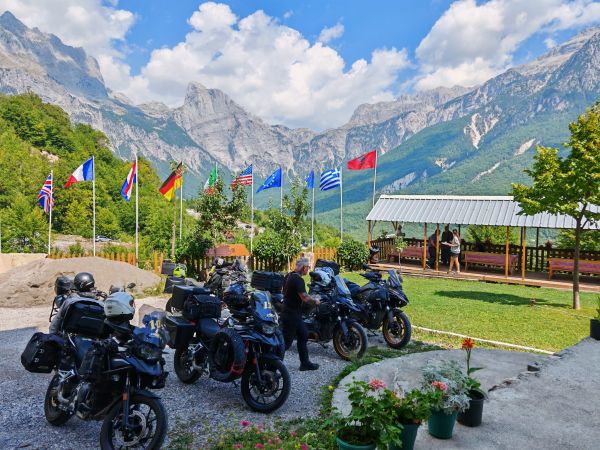
Albania Motorcycle Tour Balkans 2026
Seven Riders, Seven Countries, 4,648 km: Our Motorcycle Tour Through Albania and the Balkans, August 2026.

Guided Balkan Motorcycle Tour 7 Countries 95% Asphalt
Seven Balkan countries, extraordinary routes off the tourist track, ~95% asphalt and no highways ...

Croatia - Route des Grandes Alpes, July 2025
2 Americans - 1 boy and 1 girl, 1 motorcycle - a BMW R1250GS, one motorcycle tour and one goal ...

Balkans - Romania Tour, June 2025
At the end of June 2025, the time had finally come. Between June 23 and June 25, all participants in this tour gradually arrived in Trogir.

Balkans - Italy Tour, May 2025
Together we covered about 3700 km, crossing the Adriatic twice, from Durrës to Bari and from Ancona to Split.

Customer Money Protection
Customer money protection before payment — why advance payments for motorcycle tours should never be based on trust alone.
Motorcycle Excess and Damage Risk
Understand motorcycle excess and optional excess insurance before joining a tour with a rented or provided motorcycle.

Packing List for a Motorcycle Tour
Pack light, ride better: a practical motorcycle tour packing list for guided and self-guided touring with luggage on the motorcycle.
Safety training and correct cornering!
A small but important journey through the topic of safety training and correct cornering!

Motorcycle Route Planning
Good motorcycle routes are planned around roads, timing, logistics and real riding experience — not just map points.

Motorcycle Group Tours
Group ride or solo ride — how to choose the right riding style for your next motorcycle tour.

The International Driving Permit
International Driving Permit for motorcycle tours — why your licence documents must be clear before the ride starts.
